What Happens If You Don’t Remove a Storm-Damaged Tree?
Wondering if you should remove a storm-damaged tree in NC? Learn the risks of leaving it alone and why immediate action is critical.
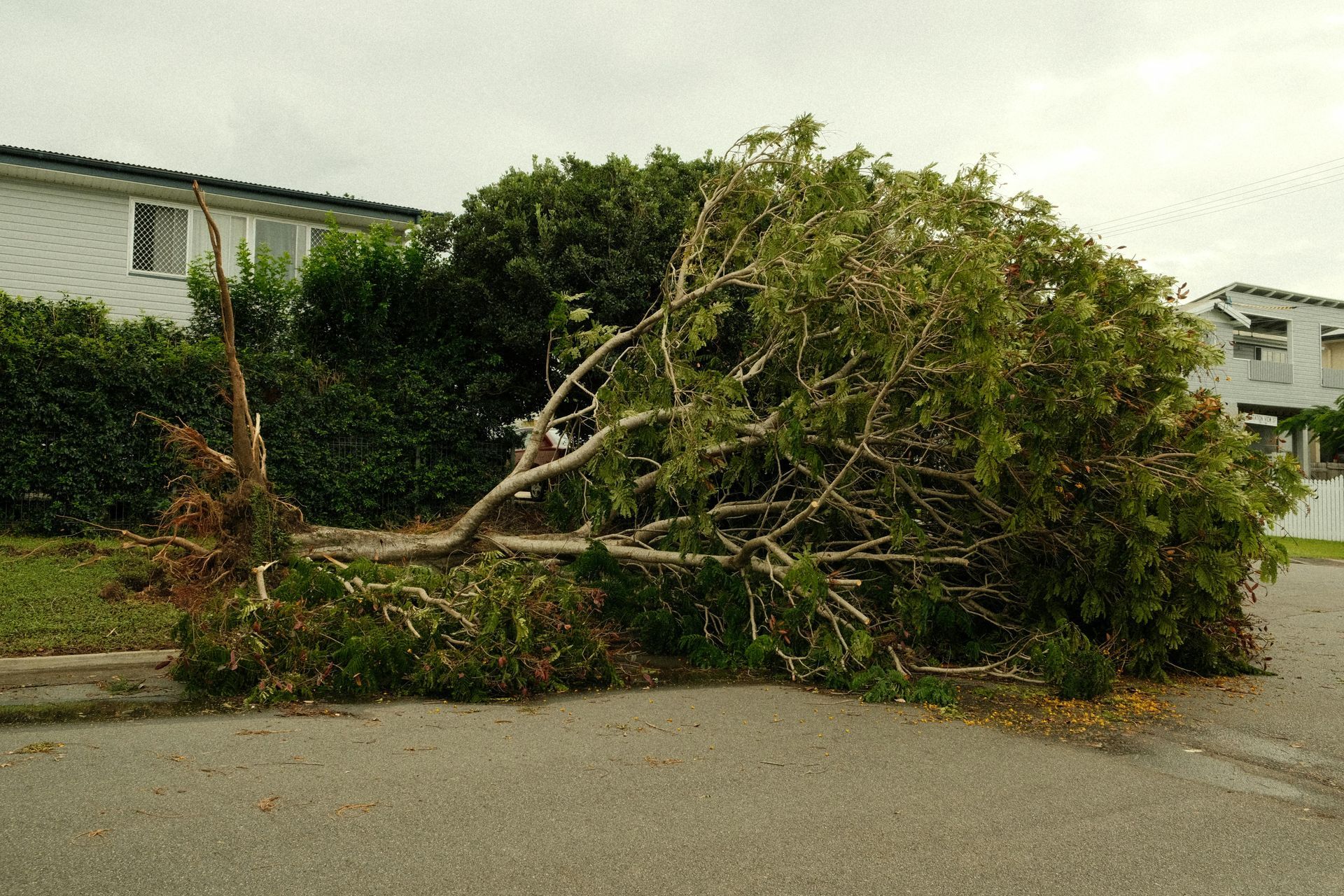
A heavy storm rolls through, and one of your trees takes a hit. Maybe a large branch snaps, or the entire tree starts leaning. It’s still standing… but just barely. You think, “Maybe it’ll be fine.”
Unfortunately, that’s exactly how bigger, costlier problems begin.
At Huffstetler Tree & Lawn Services Inc., we’ve responded to hundreds of storm calls across Gaston County where small issues became major hazards — simply because property owners waited too long.
In this post, we break down the real dangers of not removing a storm-damaged tree, and what can happen if you ignore the problem.
What Is Considered “Storm-Damaged”?
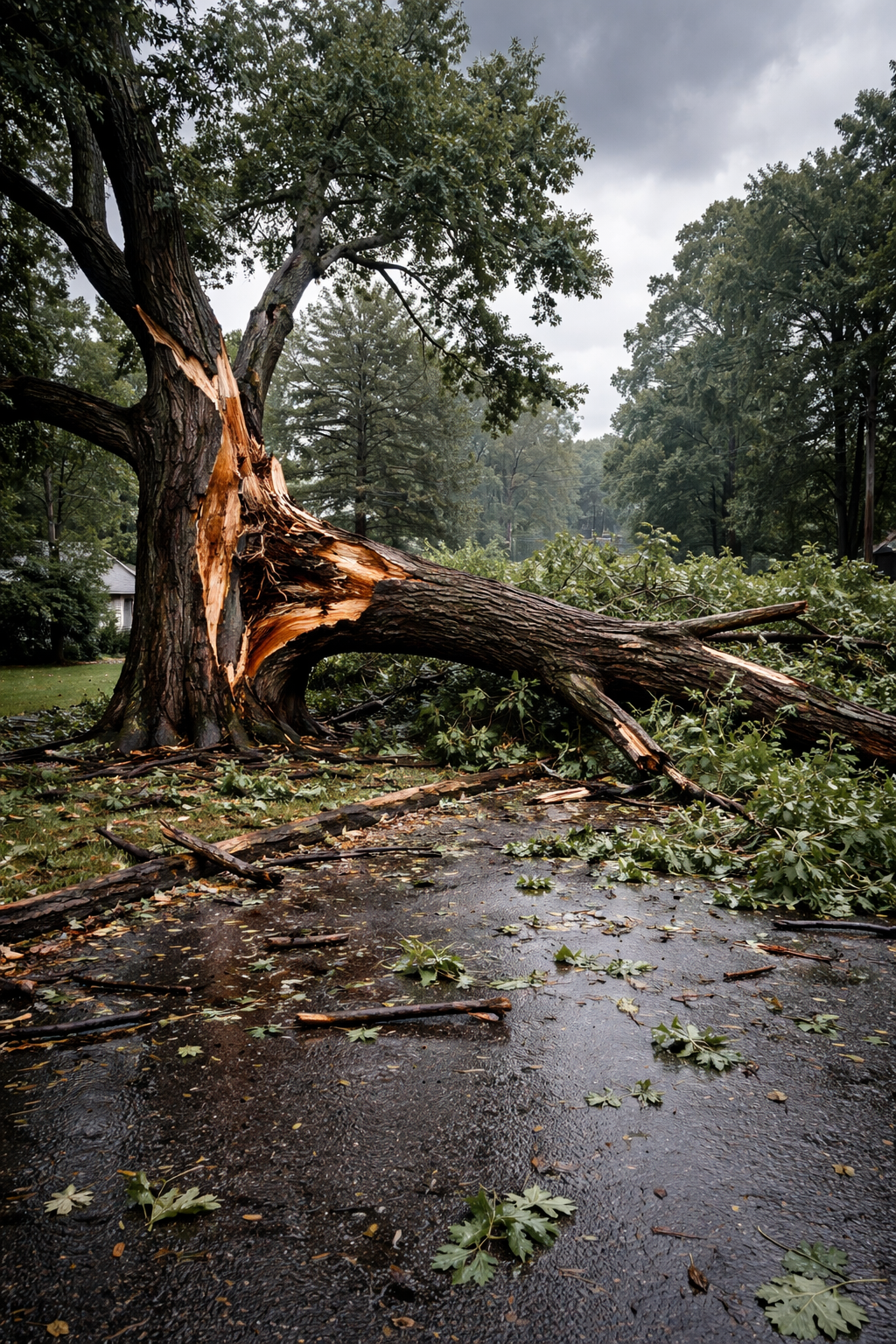
Not all tree damage is easy to spot. After a storm, look for these warning signs:
- Split trunk or large cracks
- Hanging or broken limbs (widowmakers)
- Sudden lean or uprooting
- Bark torn away from the trunk
- Exposed roots
- Dead or partially broken branches stuck in canopy
- Tree touching or near power lines
Even if the tree appears stable, internal damage could compromise its structure — turning it into a ticking time bomb during the next storm or wind event.
7 Major Risks of Ignoring Storm-Damaged Trees
1. Falling Limbs Can Cause Injury or Death
Large branches weakened during a storm may not fall right away. But wind, rain, or even time alone can cause them to break loose.
Falling limbs can:
- Injure anyone standing or walking nearby
- Crush pets, vehicles, or outdoor structures
- Damage fences, decks, or playsets
In legal terms, if a tree on your property is known to be hazardous and causes harm, you could be held liable.
2. Uprooted or Leaning Trees Are Likely to Fall
Once a tree is leaning or its roots are exposed, it has lost a portion of its anchor to the soil. Even a small storm or soft ground conditions can bring it down completely — often without warning.
Leaning trees are particularly dangerous if they are:
- Near your house, garage, or driveway
- Close to a neighbor’s property
- Within reach of power lines
Huffstetler’s emergency crew can remove dangerous trees before they fall and cause damage.
3. Structural Damage to Your Home May Worsen Over Time
If a limb punctures your roof or damages your siding, you need more than just a patch job. Waiting too long allows:
- Water intrusion
- Mold growth
- Insulation saturation
- Pest infestations
Each of these issues increases the repair costs — and in many cases, insurance won’t fully cover damage that got worse due to inaction.
4. Insurance Claims May Be Denied or Reduced
Homeowners insurance often covers storm-related tree damage. However, most policies also state that the policyholder must take reasonable action to prevent further damage.
Delaying removal or cleanup can result in:
- Partial denial of your claim
- Loss of coverage for secondary damage
- Legal complications if damage spreads to neighboring properties
Immediate tree assessment and removal can help preserve your insurance claim — and we provide full documentation to support it.
5. Tree Disease and Pests Can Spread Quickly
Damaged limbs and open wounds on a tree attract:
- Insects (borers, ants, beetles)
- Fungal infections (root rot, cankers)
- Mold and mildew
- Woodpeckers and rodents
Even if the tree doesn’t fall, it may begin to decline — putting surrounding trees at risk.
Removing infected or severely damaged trees is critical to protecting your entire landscape.
6. Storm-Damaged Trees Become More Hazardous Over Time
Tree damage is rarely a one-time issue. It tends to worsen silently in the weeks or months after the storm.
What begins as a cracked branch can lead to:
- Hollowing of the trunk
- Loss of balance
- Internal decay
- Weakened root system
Each passing day increases the chance of sudden failure — especially in North Carolina, where heavy winds and rainfall are common even outside hurricane season.
7. You Could Be Liable for Neighboring Damage
If a tree on your property falls and damages a neighbor’s home, fence, or vehicle — and you had reason to know it was a risk — you may be financially responsible.
This includes:
- Trees previously reported by neighbors
- Obvious visible damage (leaning, dead limbs)
- Post-storm neglect
A court or insurance adjuster may rule that you failed to take reasonable action, leaving you with out-of-pocket liability.
Local Example: A Delayed Response in Dallas, NC
In late 2023, a homeowner in Dallas, NC experienced a strong storm that left a 50-foot pine leaning slightly toward their detached garage. It didn’t fall, so they chose to wait.
Three weeks later, during a light afternoon rain, the tree uprooted and collapsed — crushing the garage roof and a vehicle inside. Insurance partially covered the loss, but denied coverage for mold and electrical repairs that developed due to delayed action.
The total out-of-pocket cost: over $12,000.
Signs It’s Time to Remove a Storm-Damaged Tree
Don’t take chances. Call for removal if:
- The tree leans more than 15 degrees
- More than 30 percent of the crown is broken
- The trunk is split or hollow
- Roots are exposed or lifted
- The tree is near a home, power line, or fence
If you’re unsure, Huffstetler Tree & Lawn Services offers free assessments in Alexis, Gastonia, Mount Holly, and surrounding areas.
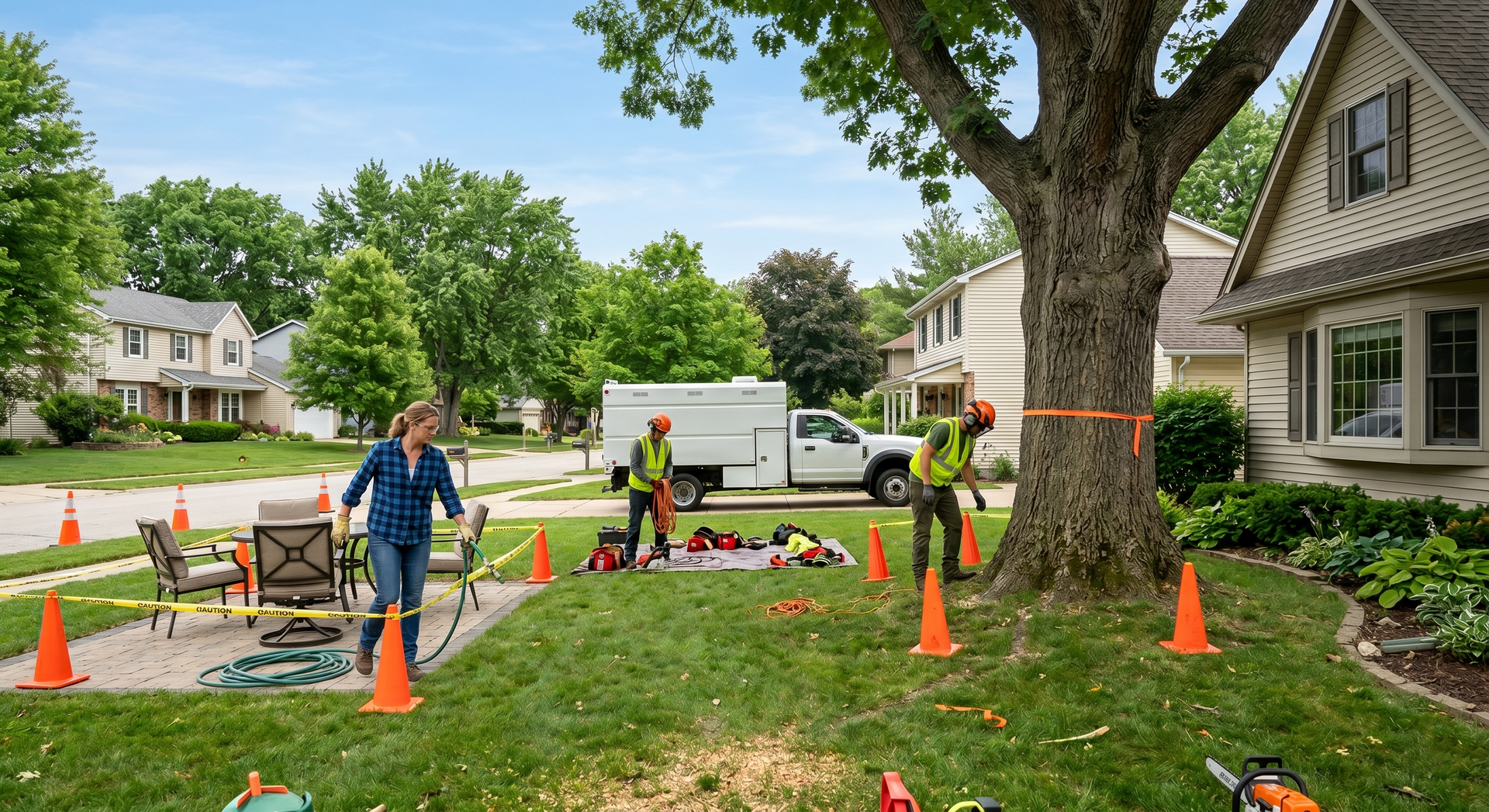
What to Expect From Professional Storm Tree Removal
When you call Huffstetler for storm damage:
- Rapid on-site inspection – We assess the tree's risk and structural integrity.
- Controlled limb and trunk removal – Using cranes, aerial lifts, and safety rigging.
- Stump grinding or removal – If needed, to prevent regrowth or hazard.
- Debris cleanup and hauling – We leave the site clean and safe.
- Insurance documentation – We help with photos, damage reports, and invoicing.
We are fully licensed and insured, with 24/7 emergency services across Gaston County.
FAQs: Storm-Damaged Tree Risks in North Carolina
How soon should I remove a damaged tree after a storm?
Immediately. Waiting even a few days can lead to falling limbs, pest problems, and insurance complications.
Will insurance cover removal of a damaged tree?
If the tree damaged a covered structure (like your home or garage), most policies cover removal. If it only fell in your yard, coverage may be limited.
Can I trim the damaged parts and leave the rest?
In minor cases, yes. But trimming must be done carefully — and sometimes the damage is internal and not visible. Always get a professional evaluation.
What if my neighbor’s tree damaged my property?
If it fell due to an act of God (like a storm), it’s usually your insurance that covers it. If the tree was dead or hazardous before, your neighbor may be liable.
Can Huffstetler remove trees in the rain or at night?
Yes. We offer 24-hour emergency response, including during storms or after dark, when safety permits.
Internal and External Resources
- [Storm Damage Services – https://www.huffstetlertreeservice.com/storm-damage]
- [Emergency Tree Removal – https://www.huffstetlertreeservice.com/tree-removal]
- [Tree Trimming – https://www.huffstetlertreeservice.com/tree-trimming]
- [Gaston County Emergency Management – https://www.gastongov.com/356/Emergency-Management]
- [FEMA Tree Removal Guidelines – https://www.fema.gov/fact-sheet/tree-removal-cleanup-guidance]
Don’t Wait for Disaster to Strike Twice
If you’ve got a tree that took damage in a recent storm — don’t wait for it to fall. Let Huffstetler Tree & Lawn Services Inc. inspect it and remove it safely.
Call us at 704-913-6109 or request a free quote at https://www.huffstetlertreeservice.com.
Serving Alexis, Dallas, Gastonia, Mount Holly, and all of Gaston County with fast, reliable, and insured tree service.
One storm is enough. Let us help you prevent the next disaster.