Signs a Tree Is Dying and When to Remove It in North Carolina
the warning signs of a dying tree in North Carolina and when removal is necessary
Trees are an investment in your property. They provide shade, privacy, and curb appeal. But when a tree begins to decline, it can quickly shift from asset to liability.
In North Carolina — especially in areas like Alexis, Gastonia, and throughout Gaston County — seasonal storms, heavy clay soil, pests, and humidity can accelerate tree decline. Knowing the early signs that a tree is dying can help you act before it becomes a hazard.
This guide explains:
- How to tell if a tree is dying
- The difference between a stressed tree and a dead tree
- When removal becomes necessary
- Risks of leaving a dying tree standing
- What to expect during a professional evaluation
Why Dying Trees Are Dangerous
A dying tree is structurally unstable. As internal decay spreads:
- Wood becomes brittle
- Limbs weaken
- Roots lose strength
- The trunk can hollow out
In high-wind regions like Gaston County, weakened trees are far more likely to fall during storms.
Even if a tree appears stable, internal rot may be progressing unseen.
10 Common Signs a Tree Is Dying
1. Large Dead Branches in the Canopy
If more than 25 to 30 percent of the branches are dead, the tree is in serious decline.
Dead limbs are brittle and snap easily during wind or rain.
2. Cracks in the Trunk
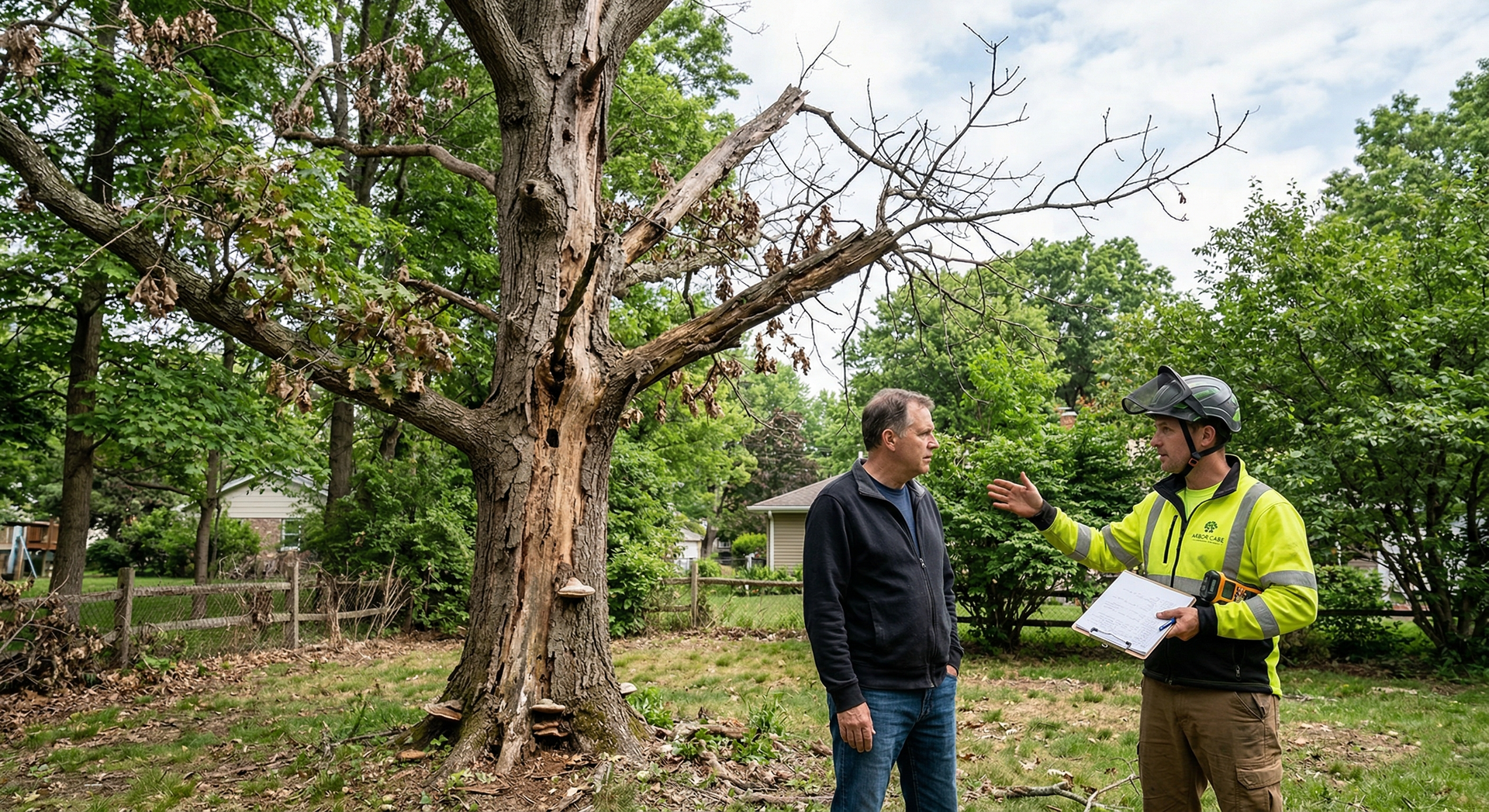
Deep vertical cracks in the trunk can indicate structural weakness. If the crack extends deep into the wood, removal may be necessary.
3. Fungus Growing at the Base
Mushrooms or fungal growth around the trunk often signal root rot. Once roots begin decaying, the tree’s stability is compromised.
4. Hollow or Soft Wood
If you tap the trunk and it sounds hollow, or if wood feels soft and crumbly, internal decay may be advanced.
Hollow trees are unpredictable and often unsafe.
5. Leaning Suddenly
A tree that suddenly begins leaning after a storm or heavy rain may have root damage.
If the lean increases over time, removal is typically recommended.
6. Sparse or Discolored Leaves
A thinning canopy, early leaf drop, or leaves turning brown during the growing season may indicate disease or stress.
Seasonal changes are normal. Sudden or uneven leaf loss is not.
7. Peeling or Missing Bark
Bark protects the tree from disease and pests. Large areas of missing bark expose the tree to decay and infestation.
8. Pest Infestation
Wood-boring insects like beetles often target weakened trees. Signs include:
- Small exit holes
- Sawdust around the base
- Increased woodpecker activity
Infestation can accelerate decline.
9. Root Damage
Construction, trenching, or soil compaction can damage roots. If more than 20 percent of the root system is affected, the tree may not recover.
10. No Buds During Growing Season
If nearby trees are budding and yours is not, it may be dead.
Scratching the bark lightly can reveal if the tree is alive. Green tissue underneath indicates life. Brown, dry tissue suggests death.
Stressed vs. Dead: How to Tell the Difference
Not every struggling tree needs removal. Some are stressed but recoverable.
Stressed trees may show:
- Minor leaf drop
- Limited branch dieback
- Mild discoloration
- Temporary pest presence
Dead or dying trees show:
- Extensive canopy loss
- Structural cracks
- Root instability
- Widespread decay
A professional inspection can determine whether trimming, treatment, or removal is the best course of action.
When Should You Remove a Dying Tree?
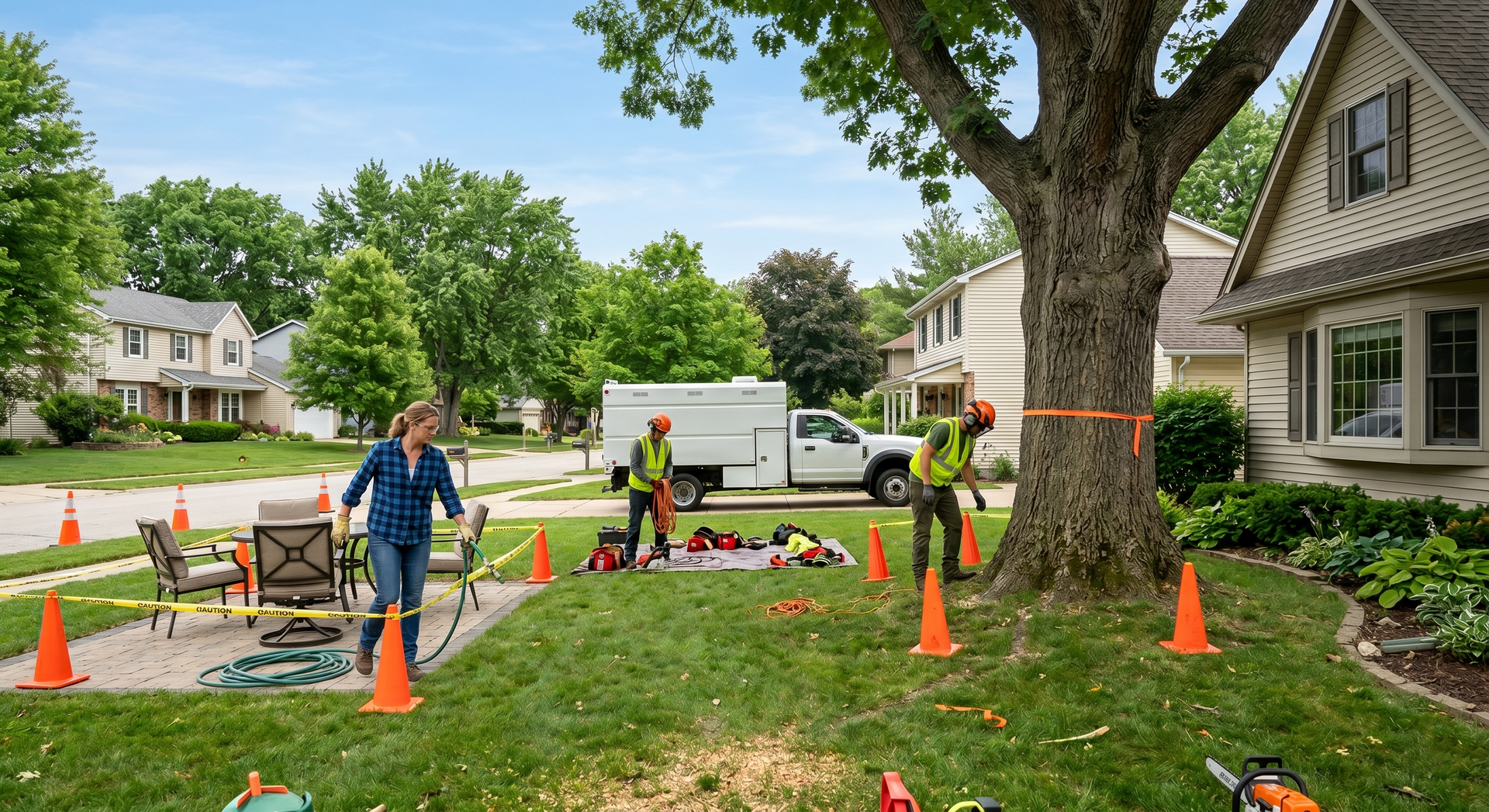
Removal becomes necessary when:
- The tree poses a fall risk
- It is near a structure or power line
- Root damage is extensive
- The trunk is severely hollow
- More than half the canopy is dead
- Storm damage worsens the condition
In residential areas of Gaston County, trees located within 10 to 15 feet of a home require careful monitoring.
Risks of Leaving a Dying Tree Standing
Delaying removal can lead to:
- Property damage during storms
- Insurance claim complications
- Liability if it falls onto a neighbor’s property
- Spread of disease to nearby trees
- Increased removal costs later
Proactive removal is often more affordable than emergency service after failure.
What Happens During a Tree Evaluation?
When evaluating a potentially dying tree, professionals assess:
- Trunk integrity
- Root condition
- Canopy health
- Soil stability
- Proximity to structures
- Overall structural balance
Sometimes trimming can extend the life of a tree. In other cases, full removal is the safest solution.
Cost Considerations for Dying Tree Removal
Removing a dying tree can range from:
- $500 to $1,200 for medium trees
- $1,200 to $2,500+ for large trees
Emergency removals cost more if the tree falls or becomes unstable.
Addressing decline early often reduces cost and risk.
Preventing Tree Decline in North Carolina
Preventative care is key.
- Schedule annual inspections
- Trim dead or weak limbs regularly
- Avoid damaging roots during landscaping
- Improve drainage around base
- Monitor for pests
North Carolina’s humidity makes regular monitoring especially important.
Frequently Asked Questions
Can a half-dead tree recover?
Sometimes, if the root system is healthy and the disease is limited. A professional evaluation is necessary.
Is it cheaper to remove a tree before it dies completely?
Often yes. Dead trees can become unstable and require more complex removal techniques.
Can I leave a dead tree for wildlife?
In rural areas, some property owners keep dead trees intentionally. In residential neighborhoods, this can pose liability risks.
How quickly can a dying tree fall?
It depends on the extent of damage, weather conditions, and species. Some stand for years. Others fail during the next storm.
Do I need a permit to remove a dying tree?
Most residential properties in unincorporated Gaston County do not require permits, but HOA or city rules may apply.
Professional Tree Inspection and Removal in Gaston County
If you suspect a tree on your property is dying, early evaluation can prevent costly damage.
Huffstetler Tree & Lawn Services provides:
- Tree health inspections
- Hazard assessments
- Safe and insured removal
- Stump grinding services
- 24-hour emergency response
Serving Alexis, Gastonia, Mount Holly, Dallas, and surrounding areas.
Phone: 704-913-6109
Website: https://www.huffstetlertreeservice.com